
Voyager 1 is Back Online After Months of Silence
Voyager 1 is Back Online After Months of Silence
NASA’s 47-Year-Old Spacecraft Sends Signals From Interstellar Space Again — A Triumph in Space Engineering
???? Introduction: A Comeback From the Edge of the Solar System
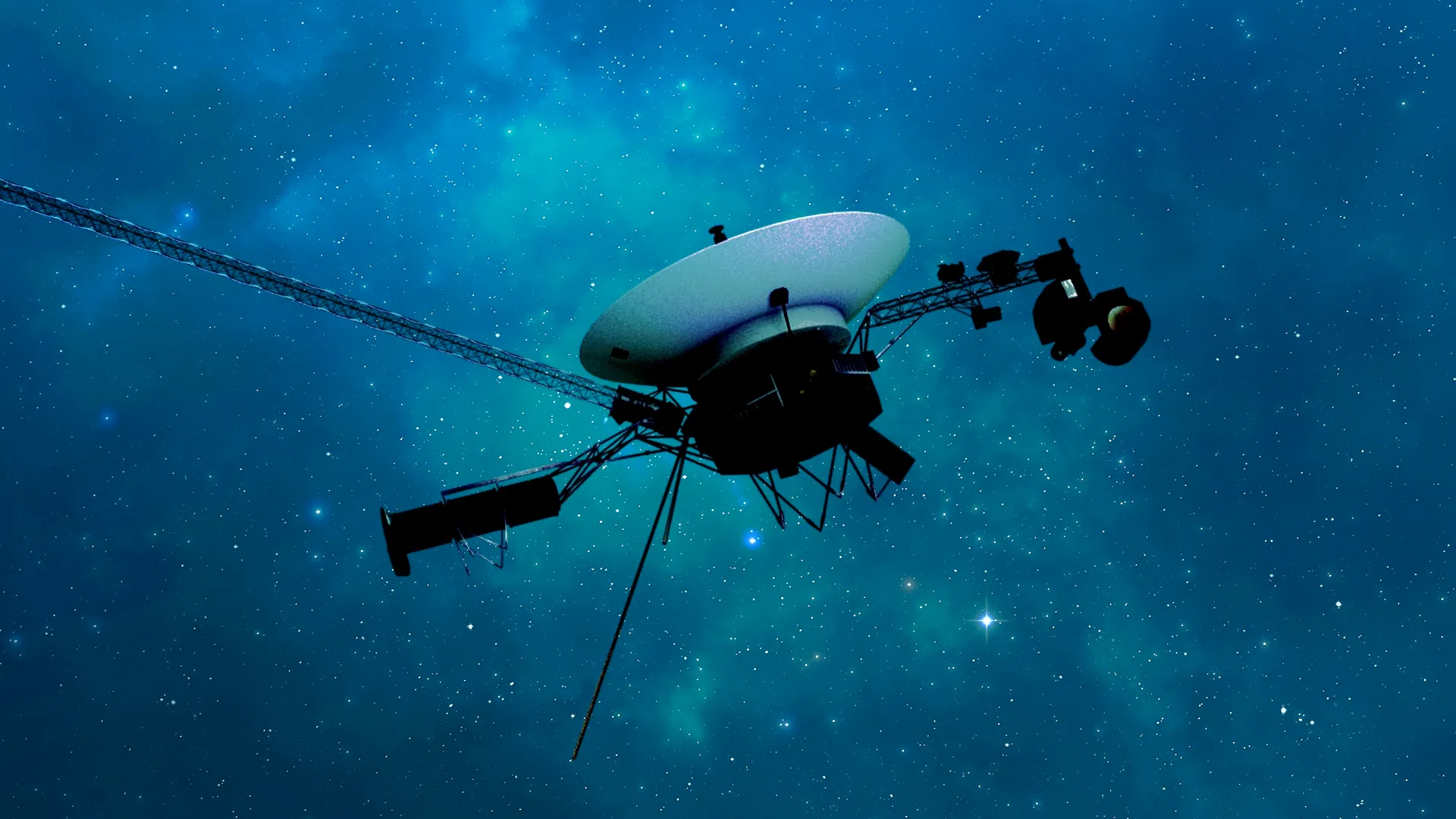
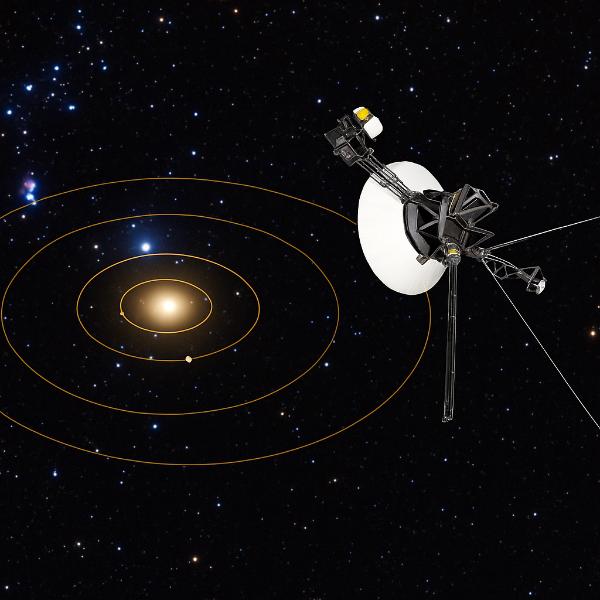
Voyager 1, humanity’s most distant spacecraft, has made headlines again in June 2025 by re-establishing contact with Earth after nearly seven months of silence. Launched way back in 1977, this veteran space probe — now over 24 billion kilometers from home — surprised even NASA engineers by coming back to life after what many feared was a fatal glitch.
This development isn’t just a technical win — it’s a tribute to human curiosity, patience, and the extraordinary endurance of 1970s engineering.
????️ What Went Wrong With Voyager 1?
In November 2023, mission control noticed something strange: Voyager 1 was still "talking," but the data it was sending made no sense. It was as if the spacecraft was speaking in a corrupted, scrambled language. The probe’s telemetry — vital technical readings about temperature, voltage, and health — became unreadable.
???? Root of the Problem: The Flight Data System (FDS)
The culprit was found to be a malfunction in one of the three core computers onboard Voyager 1 — the Flight Data System (FDS). This is the computer responsible for organizing and formatting all scientific and engineering data before it's sent to Earth.
After 46+ years of radiation exposure, temperature swings, and cosmic bombardment, a segment of memory in the FDS became corrupted. And this corrupted segment stored critical code that enabled the computer to “speak” to Earth in the correct format.
???? How NASA Solved It — A Technological Masterclass
NASA engineers from the Jet Propulsion Laboratory (JPL) had to reverse-engineer a fix for a computer system built using 1970s technology, with no spares, no direct access, and a nearly one-day communication delay (22.5 hours each way).
???????? Key Milestones in the Recovery:
March 2024: Engineers identified the memory issue and located an unused portion of memory in the FDS.
April 20, 2025: NASA sent a command to shift data encoding software to the healthy part of memory.
April–May 2025: Testing phase — small test packets were sent and received to check success.
June 14, 2025: Victory! Voyager 1 resumed transmitting properly formatted data — its first readable science and system telemetry in over seven months.
This was akin to performing heart surgery — not only remotely, but on a 47-year-old patient using tools built before USB or the internet even existed.
???? Why Voyager 1 Still Matters in 2025
Many ask: Why are we still in touch with a spacecraft launched before smartphones, DVDs, or even personal computers?
Here’s why Voyager 1 remains one of the most important scientific instruments still active today:
1. It’s in Interstellar Space
Voyager 1 crossed the heliopause (the boundary where the solar wind ends and interstellar space begins) in 2012, becoming the first man-made object to leave the solar system. It now provides first-hand data about:
Interstellar plasma density
Magnetic fields beyond solar influence
Cosmic radiation in deep space
2. It’s Collecting Never-Before-Seen Data
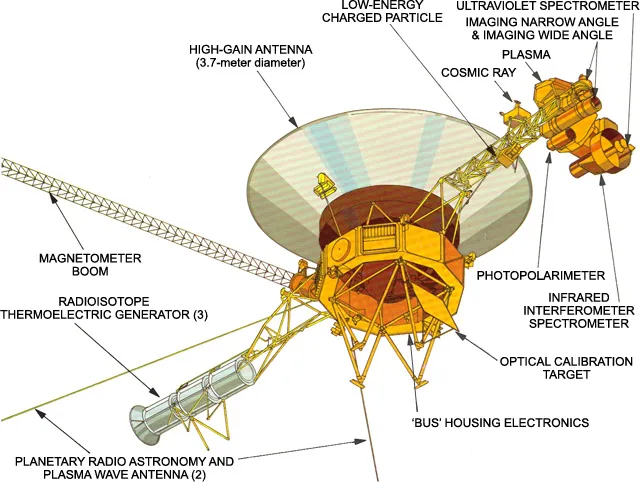
Despite its age, Voyager 1 still has working instruments, including:
Plasma Wave Subsystem (PWS) – detects density fluctuations in space
Magnetometer (MAG) – measures interstellar magnetic fields
Cosmic Ray Subsystem (CRS) – analyzes high-energy particles from galactic sources
This data is impossible to obtain from any other probe or telescope because no other spacecraft has traveled this far.
3. It Helps Prepare Future Missions
Voyager’s readings guide planning for future missions such as:
Interstellar Probe (proposed launch in 2036)
Understanding spacecraft survival over decades
Learning how long systems can withstand radiation and temperature extremes
The Golden Record: Earth’s Message to the Cosmos
Beyond science, Voyager 1 carries the famous Golden Record — a 12-inch gold-plated copper disc, curated by Carl Sagan and his team, that contains:
Greetings in 55 human languages
Sounds of nature (like thunder, wind, animals)
Music from around the world (Bach, Beethoven, Indian classical, Peruvian flute)
116 photographs of Earth and human life
It’s essentially a message in a bottle to aliens, a cultural time capsule intended to represent humanity in case the spacecraft is ever found by intelligent life — even millions of years from now.
Fun Facts About Voyager 1
Launch Date: September 5, 1977
Current Distance from Earth (June 2025): ~24.3 billion kilometers
Power Source: 3 Radioisotope Thermoelectric Generators (RTGs)
Speed: 61,000 km/h (faster than any bullet)
Estimated Power Loss: ~4 watts per year — likely to go silent by 2030
???? Timeline Recap
| Year | Milestone |
|---|---|
| 1977 | Launched from Cape Canaveral |
| 1979 | Flyby of Jupiter |
| 1980 | Flyby of Saturn |
| 1990 | Took the iconic “Pale Blue Dot” photo |
| 2012 | Crossed into interstellar space |
| 2023 | Communication glitch begins |
| 2025 | NASA recovers full data link |