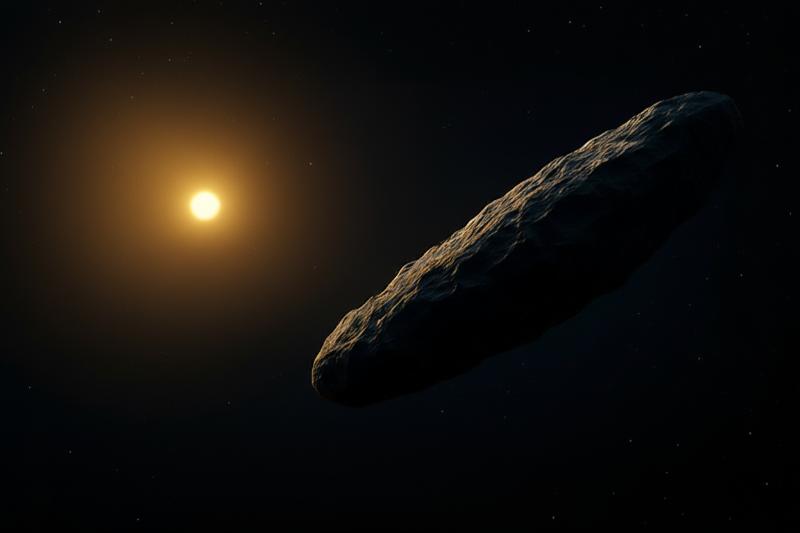


Something From Another Star Just Entered Our Solar System — And It's Massive
A New Interstellar Visitor Just Showed Up—And It's Faster, Wilder, and Way More Mysterious Than ‘Oumuamua
Why does this even matter?
Every time one of these mysterious objects drifts into our solar system, it’s like receiving a time capsule from another world—a message in a bottle, tossed across light-years.
Think about it: 3I/ATLAS was likely born around an alien star, shaped by forces totally different from our own solar system. Then something—a rogue planet, a close stellar encounter, maybe even a supernova shockwave—sent it flying into the dark. And it’s been drifting ever since through the cold emptiness of interstellar space. Until now.
Now, it’s here. And we get to observe it.
We don’t need to send a probe across hundreds of light-years. This cosmic nomad came to us, offering insights into:
how solar systems eject debris,
how planets might form and die,
and whether our solar system is typical—or an outlier.
We’ve seen this before:
In 2017, ‘Oumuamua stunned scientists with its strange shape and motion. Some even asked if it could be artificial.
In 2019, Borisov looked like a "normal" comet—but from another star.
Now in 2025, 3I/ATLAS might be something in between—or something totally new.
And this one? This might be the weirdest yet. Bigger, faster, and more active than ‘Oumuamua, but not quite like Borisov either.
That’s why this matters.
Because every time a visitor like this swings by, the universe gives us a rare glimpse of what lies beyond. And maybe—just maybe—one day, we’ll send something back.
So, what exactly is 3I/ATLAS?
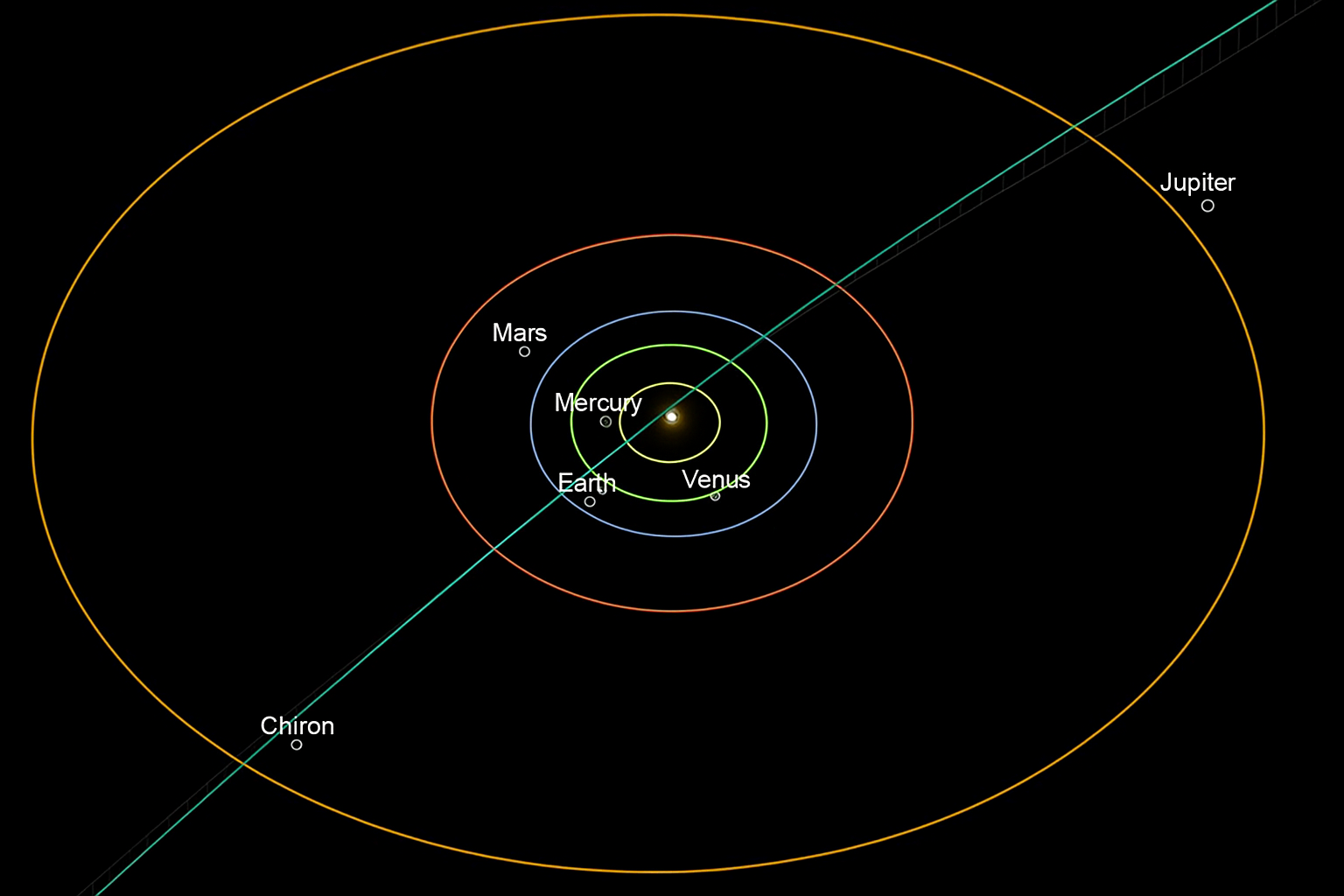
In simple terms, it’s a hunk of material—maybe ice, maybe rock, maybe both—that doesn’t belong here. It’s not from our solar system. It’s cruising through space at somewhere around 150,000 mph (yep, faster than both 'Oumuamua and Borisov), and the path it’s on? It’s shaped like a hyperbola, meaning it's just visiting. It'll swing around the Sun once and then head right back into the void.
And it's big. Possibly up to 20 kilometers across, though we’re still working that out. Some of the glow might be a dusty halo called a coma, which happens when ice starts vaporizing as it nears the Sun—like a comet’s tail.
That’s the thing: 3I/ATLAS might actually have a tail. That already puts it in a very different category than ‘Oumuamua, which didn’t leave any trail of gas or dust. Borisov had a classic tail, like something from a science textbook. ATLAS? It’s got a faint one—just enough to say, “yeah, there’s ice in here.”
How does it stack up against ‘Oumuamua and Borisov?
Let’s break it down like we’re comparing old friends:
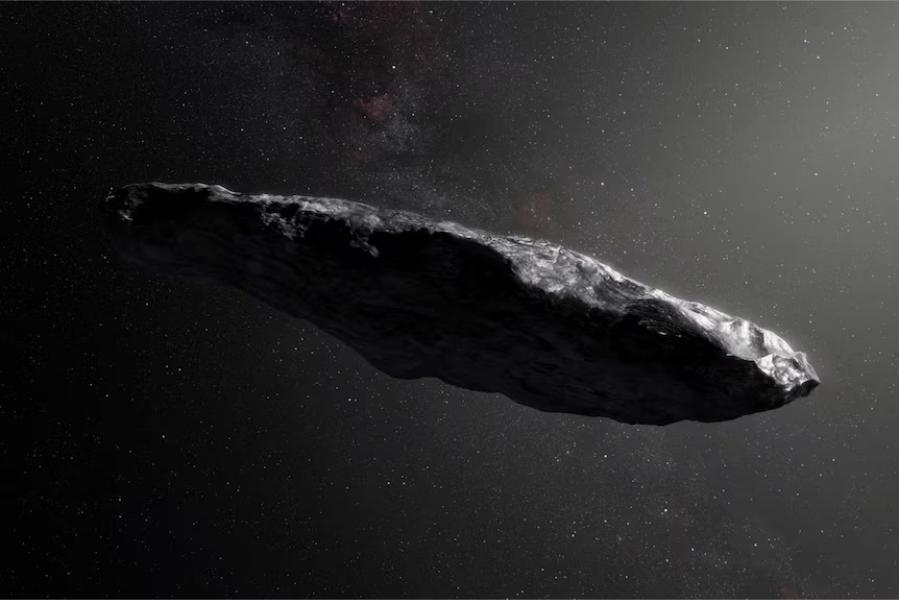
‘Oumuamua (2017): Long, weird shape. No tail. Accelerated strangely. Still a mystery to this day. Some scientists were seriously wondering if it was an alien probe.
2I/Borisov (2019): Looked and acted just like a regular comet, only it was clearly from another star system. Classic icy body, nothing too strange—just exotic.
3I/ATLAS (2025): Fastest of the bunch. Super hyperbolic orbit (meaning really not from here). Possibly the biggest. Has a faint tail. And it’s going to get pretty close to the Sun—about 1.36 AU (just a bit farther than Earth).
Oh, and here's something wild: its orbit is so extreme, scientists are saying it might be the most “unbound” object we’ve ever seen pass through.
What's next for 3I/ATLAS?
It’ll make its closest approach to the Sun in late October 2025, then pass near Earth in December. After that, it's gone forever.
Until then, astronomers everywhere will be watching—scanning it for signs of gas, analyzing its trajectory, trying to pin down its shape, size, and origins.
And the rest of us? We just get to marvel. We’re witnessing something extraordinary: a visitor from another world, flying through ours.
So maybe tonight, when you’re looking up at the stars, just know—somewhere out there, something is moving fast across the sky. It came from beyond the stars, and it’s already halfway home.