
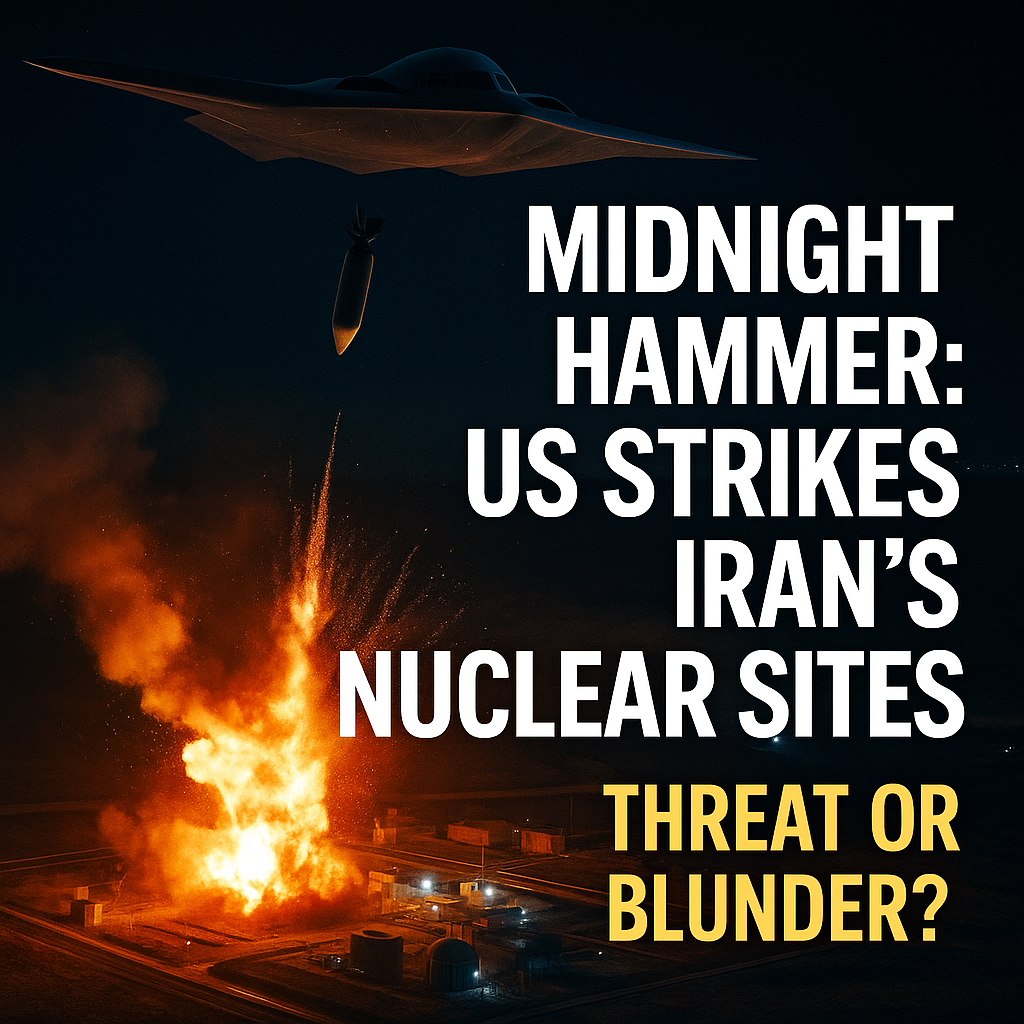
“Operation Midnight Hammer: Did the U.S. Bomb Iran’s Nuclear Ambitions into Ruin or Rage?”
In what may be remembered as one of the most shocking military maneuvers of the decade, the United States executed a high-intensity bombing operation on June 22, 2025, targeting three major nuclear facilities in Iran. This bold action—codenamed "Operation Midnight Hammer"—sent tremors through global diplomacy and reignited fears of a full-scale Middle Eastern conflict.
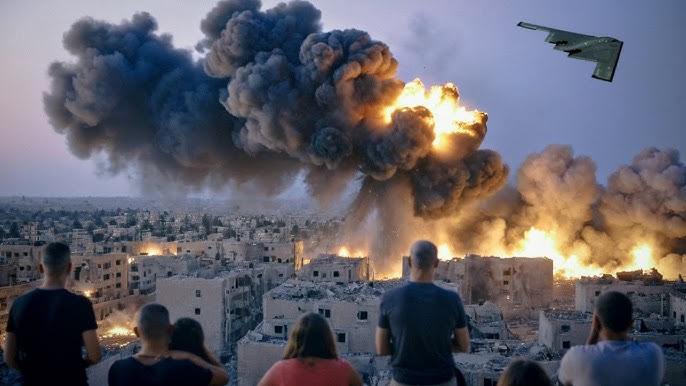
The Mission: A Quick Breakdown
Targeted Facilities:
Natanz Enrichment Plant
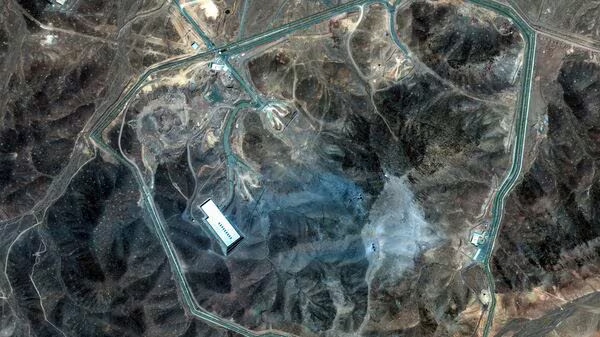
Fordow Fuel Enrichment Facility
Isfahan Nuclear Complex
Weapons Deployed:
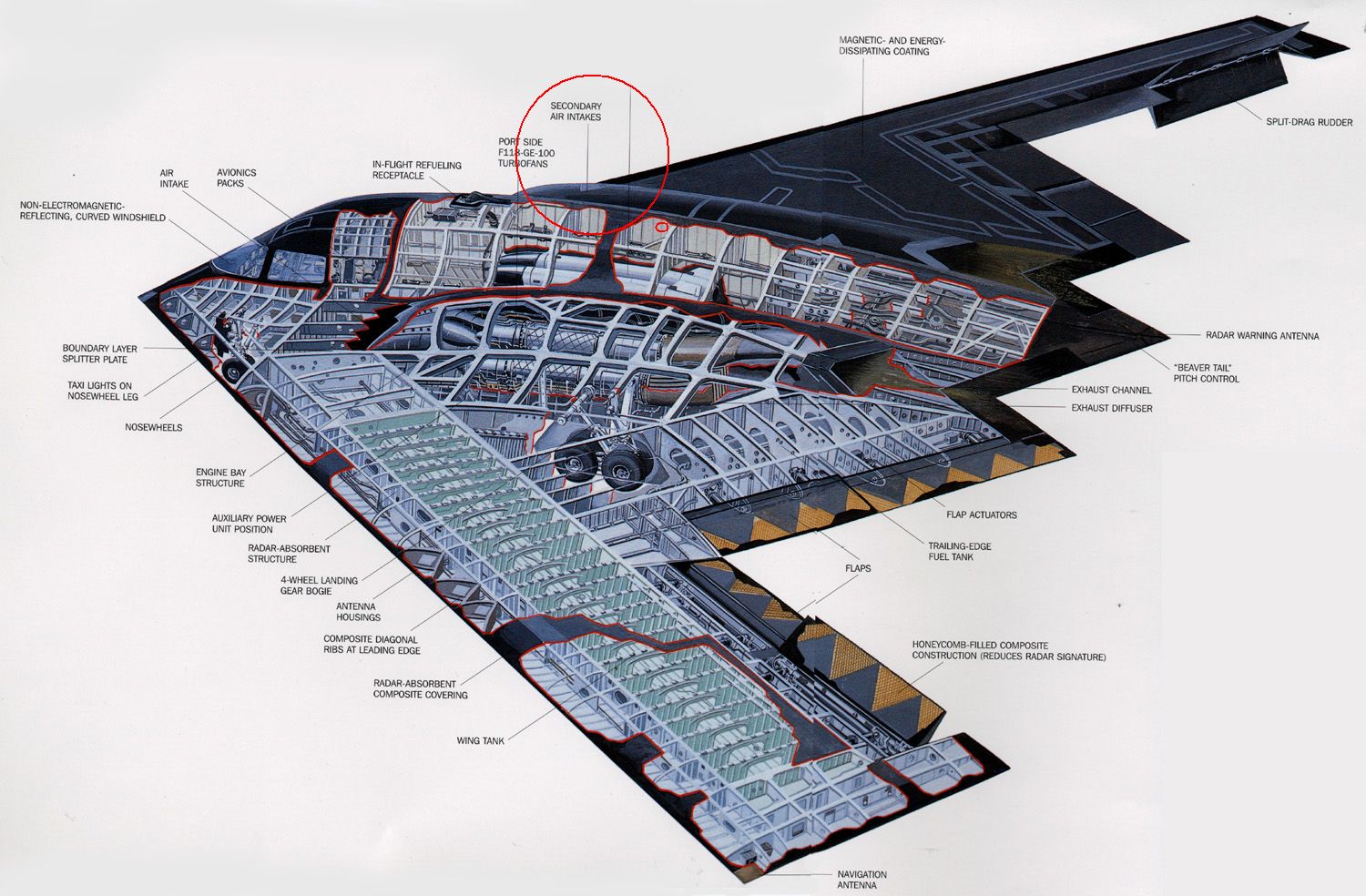
B-2 Spirit stealth bombers carrying 30,000-lb GBU-57 “bunker buster” bombs
Tomahawk cruise missiles launched from U.S. submarines in the Persian Gulf
Cyber elements possibly involved to disable anti-air systems (unconfirmed)
The strikes were intended to deliver maximum destruction to Iran’s uranium enrichment infrastructure, deeply buried beneath fortified bunkers.
Why Did the U.S. Strike?
The attack followed a sharp escalation in tensions over Iran's increased uranium enrichment levels, reportedly reaching over 90% purity—weapons-grade levels—defying the 2015 Iran nuclear deal (JCPOA) and IAEA inspections.
President Trump (who returned to office in 2025) justified the strikes, saying:
“We neutralized a catastrophic threat before it could mature. Peace through power.”
The operation was also allegedly coordinated with Israel, which had been conducting covert sabotage campaigns inside Iran for months.
Iran’s Response
Tehran immediately condemned the attack, calling it:
"An act of war"
"A violation of international law"
Iran’s Supreme National Security Council claimed that:
“Much of the infrastructure was preserved.”
“Reconstruction has already begun.”
“Retaliation is not a question of if, but when.”
Iran also launched a limited missile barrage on U.S. bases in Iraq the following day, injuring American personnel—raising fears of a prolonged regional conflict.
Was It a Success or a Strategic Misfire?
What the U.S. Achieved:
Significant damage to surface-level and some underground centrifuge halls.
A temporary delay in Iran’s nuclear progress, estimated at 1 to 3 years.
A strong deterrent message to both Iran and other adversaries.
But What It Didn’t Accomplish:
Iran retains its nuclear knowledge and stockpiled enriched uranium.
Deep-enriched underground labs (like Fordow) may have survived.
The strikes unified hardline elements in Iran, potentially accelerating retaliation or future weapons development.
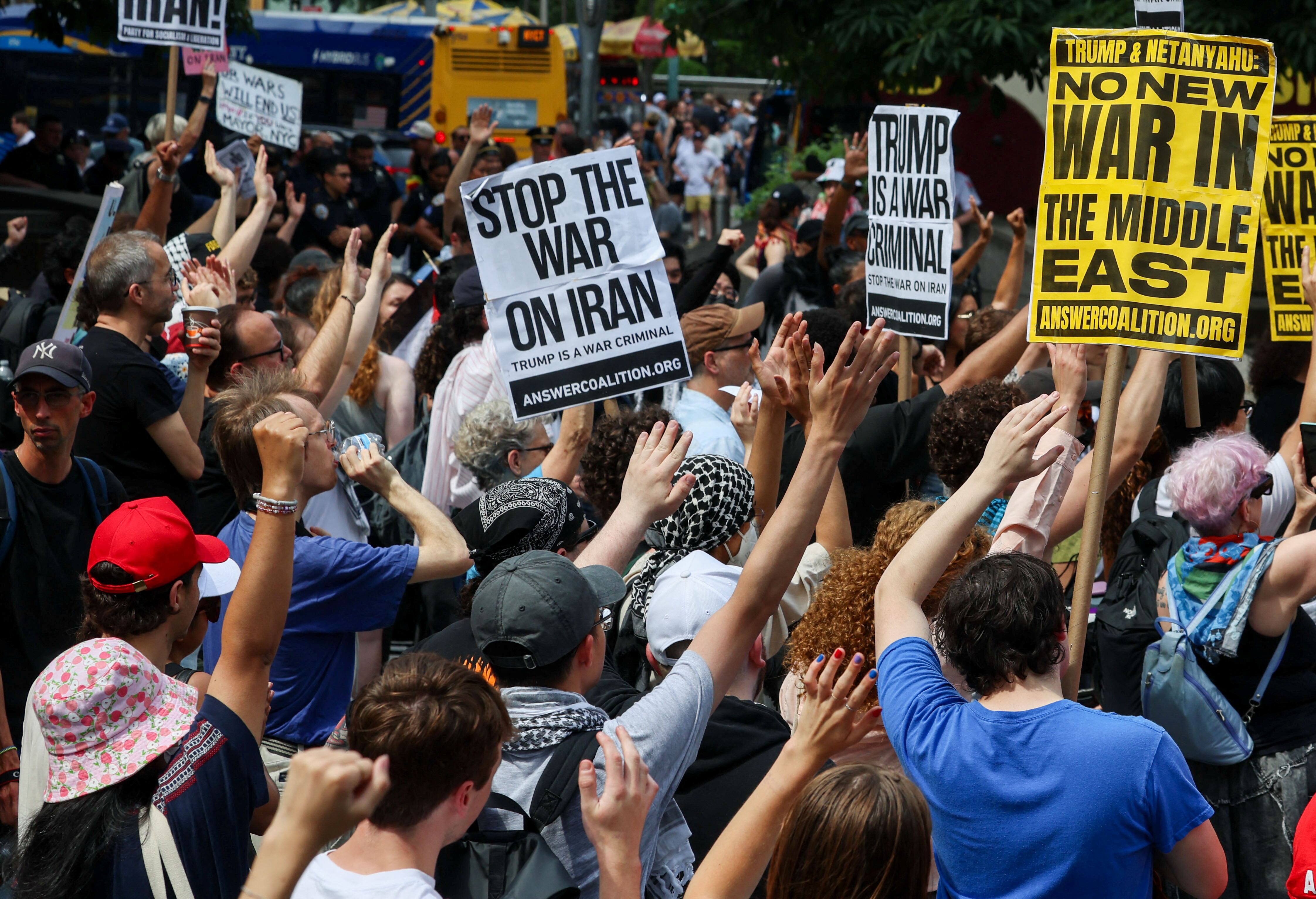
The global community, including U.N. and EU, criticized the U.S. action as unilateral and dangerous.
Global Reaction
Russia & China: Condemned the strike and demanded an emergency U.N. Security Council meeting.
European Union: Called the attack a “reckless escalation” that undermines diplomacy.
Israel: Praised the U.S. for its “bold and necessary intervention.”
The U.N. warned that further conflict could lead to:
A massive refugee crisis
Disruption of global oil supply via the Strait of Hormuz
Potential cyber retaliation across Western infrastructure
Conclusion: Strike or Spark?
The U.S. strikes on Iran’s nuclear bases mark a dramatic pivot from negotiations to hard military coercion. While they likely bought time, they didn’t end Iran’s nuclear ambitions—instead, they may have hardened resolve and created an even more dangerous standoff.
This moment in history is a test:
Can technology and firepower contain ideology and ambition? Or will this just light a fuse for the next regional war?