

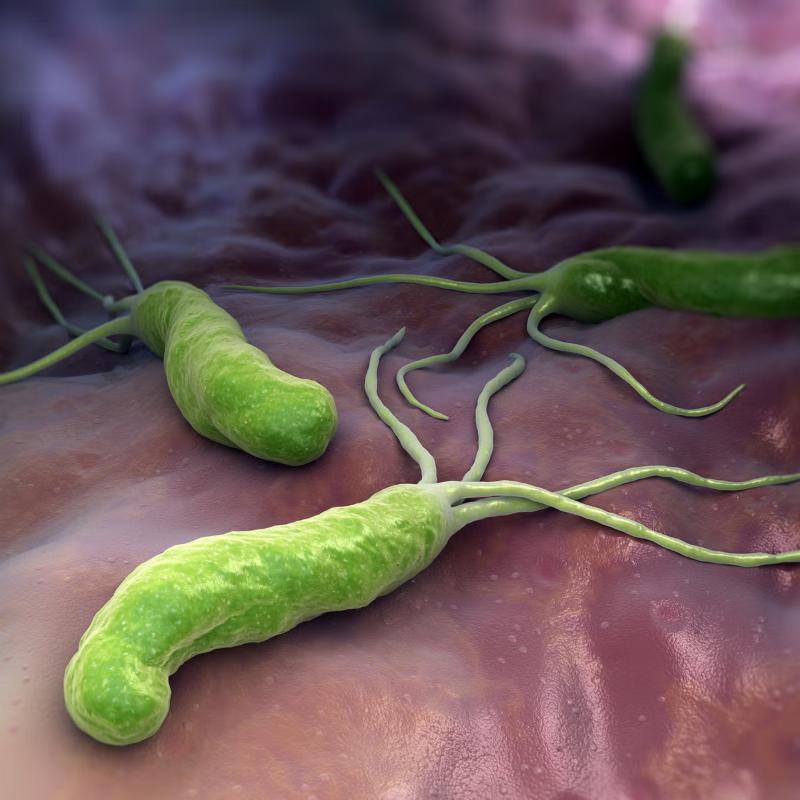
How an Ulcer-Causing Bacteria Might Help Fight Alzheimer’s
The Bacteria That Might Save Your Brain:
It’s hard to believe that something living in your stomach—the same thing known for causing painful ulcers—might one day help protect your brain. But that’s exactly what scientists are exploring, thanks to a surprising breakthrough involving Helicobacter pylori, a common bacteria most of us try to avoid.
In a recent study, researchers found that a small protein fragment produced by this bacteria can block the buildup of two harmful substances in the brain: amyloid-beta and tau. These two proteins are directly linked to the development of Alzheimer’s disease. When they start clumping together, they form plaques and tangles that interfere with brain function, memory, and cognition.
But here’s what’s so amazing: when this bacterial protein was added in a lab setting, the harmful buildup of those brain-clogging proteins was nearly stopped. Not only that, it also seemed to interfere with similar toxic buildups seen in Parkinson’s disease and even type 2 diabetes.
So how does it work? The protein fragment appears to break the process before the damage begins. Instead of waiting until harmful clumps form, it stops them from forming at all. That’s a game-changer. Most current Alzheimer’s treatments try to deal with the damage after it’s already been done. This approach is different—it could be a way to prevent that damage in the first place.
Of course, this is still in the early stages. So far, the discovery has only been tested in lab experiments. It hasn’t reached animal studies or human trials yet. But it opens a completely new direction for scientists—one that could reshape how we think about bacteria and brain health.
Instead of treating all bacteria as harmful, researchers are now asking: what if some of them actually have benefits we’ve overlooked? Rather than trying to eliminate this ulcer-causing microbe completely, the idea now is to possibly isolate or mimic the helpful parts of it, and turn them into treatments.
This discovery is exciting not just because it’s unexpected, but because it reminds us how much we still have to learn about the body—and how some of the biggest solutions might come from the most unlikely places.