

China Unveils Mosquito-Sized Spy Drone That Could Change Modern Warfare
China Unveils Mosquito-Sized Spy Drone That Could Change Modern Warfare
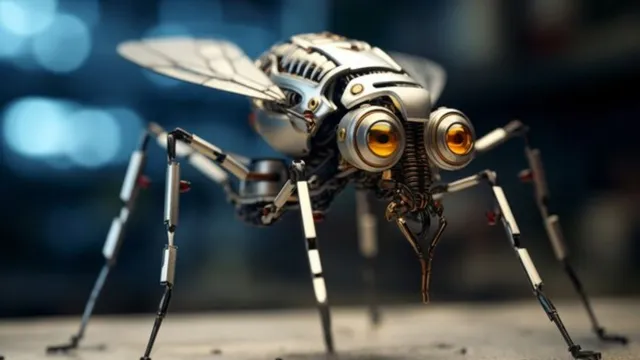
In a move that sounds more like science fiction than science, China has just revealed a tiny, insect-inspired surveillance drone — and it’s causing quite a buzz in defense circles. The device, measuring just 2 centimeters and weighing 0.3 grams, is barely larger than a mosquito, but it's packed with cutting-edge tech that could redefine the future of military reconnaissance.
The microdrone was showcased on CCTV-7, a state-run Chinese military channel, and developed by researchers at the National University of Defense Technology. What makes this so groundbreaking isn't just its size — it’s the fact that it flaps its tiny wings nearly 500 times per second, mimicking the flight of real insects. And despite its minuscule frame, it’s equipped with sensors, cameras, and flight stabilization tech, allowing it to silently hover, fly, and even maneuver through tight indoor spaces where traditional drones wouldn’t stand a chance.
Because of its ultra-lightweight design and organic motion, the drone can likely evade most radar systems, making it a potential game-changer for stealth surveillance in urban or indoor military operations. The intention here isn’t just to create cool tech — this device is purpose-built for real battlefield scenarios, such as spying, target marking, or entering enemy environments undetected.
What’s even more interesting is that this isn't the first time microdrones have been explored. Other countries, like the U.S., already use palm-sized surveillance drones like the Black Hornet, which has seen action in NATO forces. But China’s version is even smaller, far more insect-like in design, and possibly more agile in constrained spaces.
Still, there are limitations. At this stage, the drone is likely a prototype, and questions remain about battery life, signal strength, and how well it would function in unpredictable environments like high winds or electronic warfare zones. But its very existence is enough to signal that microdrones — once seen as experimental curiosities — are becoming real military tools.
As global powers push forward in miniaturized robotics, the implications go far beyond espionage. This technology opens up questions about privacy, ethics, and how surveillance can be conducted undetected in both civilian and military zones. And while the full capabilities of China’s microdrone aren’t publicly disclosed, one thing is clear: the future of warfare is getting smaller, smarter, and harder to see coming.